Cold Scoops, Crisp Layers
At the two temperature extremes of the kitchen—a −18°C freezer drawer and a 205°C pastry oven—water management determines everything. In frozen sorbets and kulfis, unbound water freezes into jagged ice shards unless controlled by precise sugar solids and natural fruit pectins.
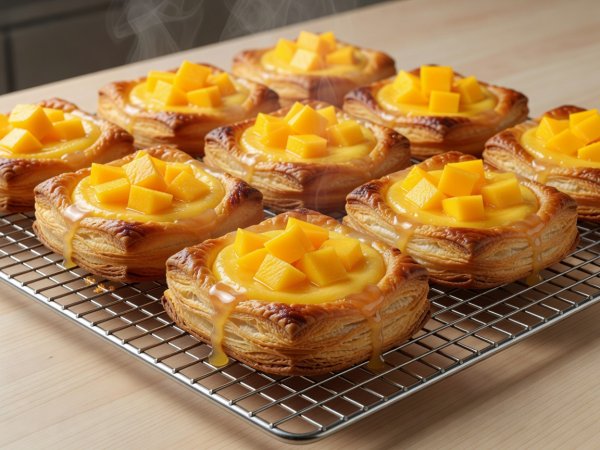
In laminated puff pastry, Danish pinwheels, and choux au craquelin, steam is the leavening engine that lifts butter-layered dough into hundreds of crisp flakes; yet if a wet mango filling leaks early in the bake, those same layers collapse into tough, doughy paste.
Targeting 28°–30° Brix for Scoopable Frozen Mango
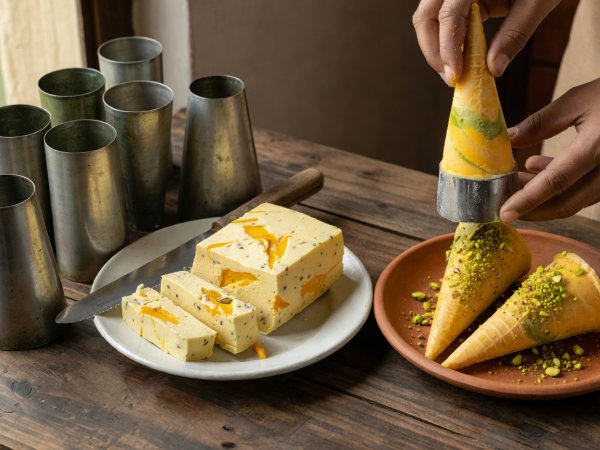
Among all orchard fruits, mango is uniquely gifted for sorbet because its pulp contains natural soluble pectin and hemicellulose that wrap around microscopic ice crystals like a dairy stabilizer. However, because mangoes vary from 13°Brix to 22°Brix, following a fixed cup-measure sugar recipe often produces a sorbet that is either rock-hard or slushy.
Keeping Tropical Pastries Crisp for Hours
When baking mango Danish pastries or puff pastry turnovers (chaussons), never place raw diced mango directly onto unbaked laminated dough. Instead, cook diced Kent mango with 10% sugar and 1.2% NH pectin (or cornstarch slurry) until the compote reaches 60°Brix, then chill thoroughly. A high-solids compote has low water activity ($a_w$), meaning it will not boil wildly or soak through the butter layers during a 200°C bake.
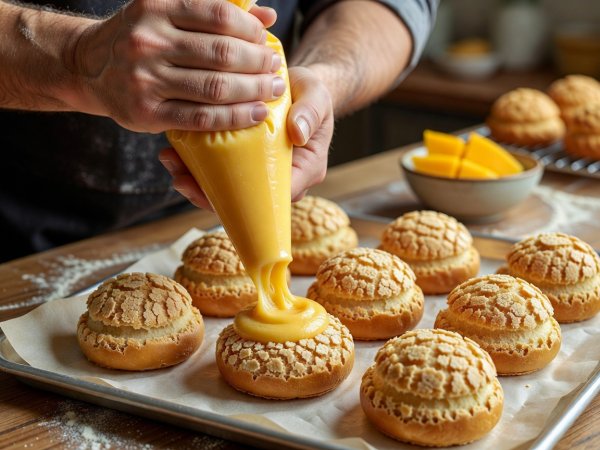
For Mango Choux au Craquelin and Mango Mille-Feuille, bake the pastry shells until deeply amber and dry inside, then fill close to serving time with a Mango Diplomat Cream—pastry cream cooked with reduced mango purée and lime zest, stabilized with a touch of gelatin, and lightened with whipped heavy cream.