Crumb Meets Fruit
When mango enters a hot oven inside a cake batter or atop a pastry shell, two competing transformations take place. Starch granules in the flour need sufficient water to hydrate and gelatinize between 60°C and 75°C, yet excess free water migrating out of fruit pulp delays crumb setting and steams shortcrust pastry from within.
By adjusting how you incorporate mango—using reduced purée in the emulsion phase of a chiffon cake, slicing firm-ripe cheeks for caramelized skillet bakes, and emulsifying butter into mango-lime curd at 82°C—you gain intense fruit colour and aroma while keeping sponges feather-light and tart bases audibly crisp.
Chiffon Cakes vs. Browned-Butter Upside-Down Cakes
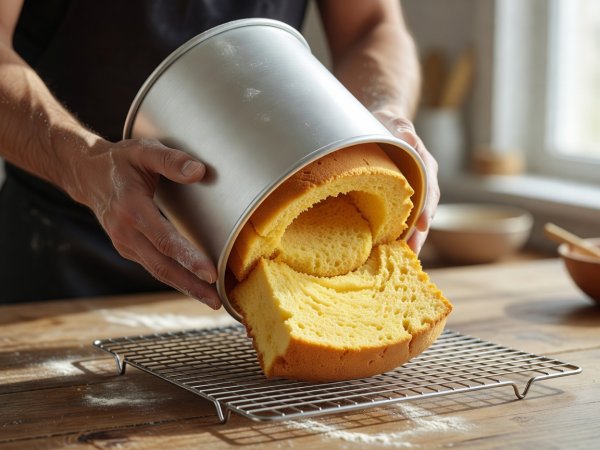
In an oil-based mango chiffon cake, the egg yolk batter carries all the flavour. Whisking 110 g of reduced Alphonso or Ataulfo purée (at 24°Brix) with neutral grapeseed oil, egg yolks, and low-protein cake flour (8% protein) creates a stable viscosity. When you fold in a French meringue whipped to soft, glossy bird-beak peaks with cream of tartar, the yolk base and meringue have matching densities, preventing air loss.
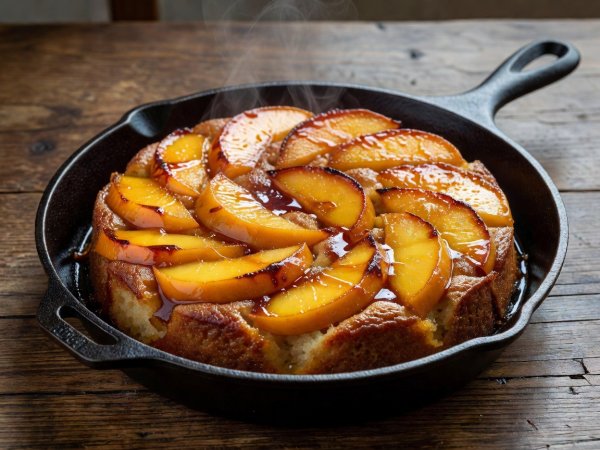
In contrast, a butter-based upside-down cake puts cut fruit at the bottom of the pan. If you use overripe mango slices, they release juice into the brown sugar butter caramel, turning the top of the cake soggy. Choose firm-ripe Kent or Keitt mangoes (sliced 8 mm thick), blot them on cotton towelling for 10 minutes, and deglaze the pan caramel with dark rum and lime juice before arranging the fruit.
Three Tested Cake & Tart Preparations
Use these baker's weights and thermal targets at home. Always weigh fruit purée after straining and reducing.
Yolk Base: 120 g cake flour, 110 g reduced mango purée, 15 ml lime juice, 55 g neutral oil, 5 egg yolks (95 g), 30 g caster sugar, 2 g salt. Meringue: 5 egg whites (165 g), 85 g caster sugar, 1.5 g cream of tartar. Bake at 165°C for 42–45 minutes; invert immediately until cold.
160 g strained Ataulfo purée, 45 ml calamansi or lime juice, 3 whole eggs + 2 yolks, 95 g sugar, pinch of salt. Cook over a simmering water bath to 82°C until thick; cool to 50°C, then blend in 115 g cold unsalted butter with an immersion blender for a glossy emulsion.
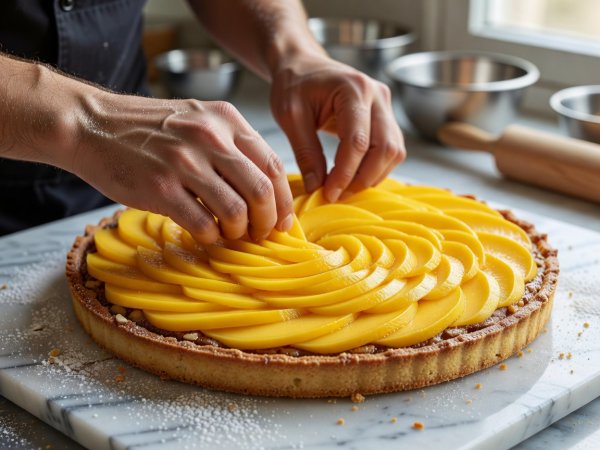
Blind-bake the sweet tart shell at 175°C with baking beans for 18 minutes. Brush the hot base with lightly beaten egg white, spread a 6 mm layer of almond cream scented with lime zest, bake 10 minutes more until golden, cool, then top with fresh shingled Carabao mango roses.
Why Mango Curd Needs Acid and High-Shear Emulsification
Classic lemon curd thickens briskly because lemon juice sits around pH 2.2, which reduces electrical repulsion between egg yolk proteins and lets them bond tightly around 78°C–82°C. Mango purée on its own is much less acidic (pH 4.2–4.6) and contains far more suspended pulp solids.
If you cook mango purée with eggs and sugar without supplementary acid, the mixture thickens sluggishly and tastes overly eggy before the proteins set. Adding 25% to 30% lime or passionfruit juice relative to the mango weight restores the charge balance so the curd sets into a clean, sliceable wedge inside a blind-baked pastry ring.